



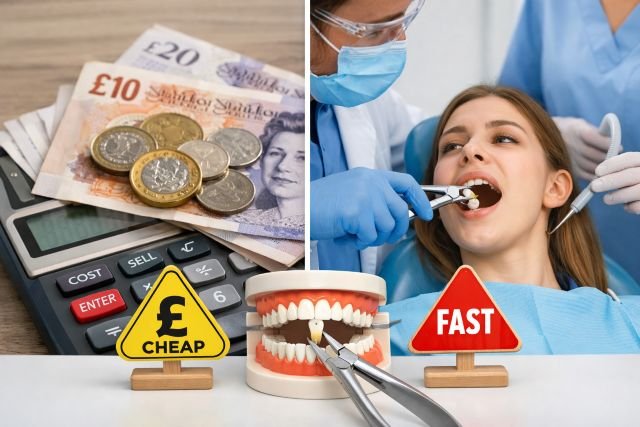
If you’re Googling wisdom tooth removal cost UK, you’re probably dealing with pain, swelling, or a looming deadline (a work trip, wedding, exams — life never waits for toothache). The tricky part is that prices in the UK vary a lot depending on whether you go NHS or private, whether the tooth is simple or impacted, and whether you need sedation or even a general anaesthetic.
- Quick definition for featured snippets: what does “wisdom tooth removal” mean?
- Wisdom tooth removal cost UK: the real-world price ranges
- NHS vs private: which is cheapest and which is fastest?
- When will the NHS remove wisdom teeth?
- Why prices vary so much between clinics
- Cheapest clinics vs fastest clinics: how to compare quotes fairly
- Typical scenarios: what people actually pay
- Waiting times: why “fastest” is often private
- How to reduce your total cost without choosing unsafe care
- FAQ
- Conclusion: choosing the right wisdom tooth removal cost UK option
This guide breaks down what you can realistically expect to pay, how “cheapest” differs from “fastest,” and how to compare clinics without getting caught by hidden extras. We’ll also cover when the NHS will remove wisdom teeth (and when it won’t), plus practical ways to speed things up safely.
Quick definition for featured snippets: what does “wisdom tooth removal” mean?
Wisdom tooth removal (third molar extraction) is a procedure where a dentist or oral surgeon removes one or more wisdom teeth. It can be a straightforward extraction for an erupted tooth, or a surgical extraction for impacted teeth that require gum and/or bone access.
Wisdom tooth removal cost UK: the real-world price ranges
The UK doesn’t have one fixed price for wisdom tooth removal, especially privately. Here’s the most accurate way to think about it:
NHS (England): usually a fixed band charge
If an NHS dentist removes your wisdom tooth in England, it’s typically charged as a Band 2 course of treatment (unless you’re exempt). The NHS wisdom tooth removal page explicitly notes Band 2 costs apply for NHS dental removal.
Private: the range depends on complexity + speed + sedation
Private fees vary by clinic location, urgency (same-day vs routine), clinician type (general dentist vs oral surgeon), and sedation. Private extraction ranges commonly start a few hundred pounds and can go much higher for complex impacted cases or sedation/GA-based care.
A useful reality check: UK reporting has highlighted sharp rises and pricing variability in private dentistry, including extractions.
NHS vs private: which is cheapest and which is fastest?
Cheapest option (for most eligible cases): NHS Band 2 in England
If you can access an NHS dentist and you meet clinical criteria, NHS care is typically the lowest-cost route because you pay a fixed band fee rather than a per-tooth private rate. The NHS notes wisdom tooth removal is a Band 2 charge when done by an NHS dentist (unless you qualify for free care).
Fastest option (in practice): private clinics with short lead times
Private clinics often offer faster appointments — including urgent or same-day assessments — because they control scheduling and aren’t limited by NHS contract capacity. You’ll commonly see “same-day” availability advertised by private providers (especially emergency dental services).
The key trade-off
If your priority is lowest possible price, NHS usually wins — if you can get access and you fit criteria.
If your priority is speed, private often wins — at a higher total cost, especially if sedation is involved.
When will the NHS remove wisdom teeth?
A major reason people get stuck comparing “cheapest vs fastest” is that the NHS doesn’t remove wisdom teeth just because they exist.
NICE guidance says prophylactic removal of pathology-free impacted third molars should be discontinued in the NHS, and surgical removal should generally be limited to cases with evidence of pathology.
In plain English: if the tooth isn’t causing disease or repeated problems, the NHS may recommend monitoring rather than removal.
NHS hospital leaflets also echo that removal is typically suggested when there are repeated problems or signs of disease, aligned with NICE guidance.
Why prices vary so much between clinics
The single biggest “gotcha” is that people compare prices without comparing what’s included. Two clinics can quote very different numbers because they’re quoting different bundles.
1) Complexity: erupted vs impacted
An erupted wisdom tooth that’s easy to access is often quicker, needs fewer instruments, and may be priced lower privately.
An impacted tooth (especially lower wisdom teeth near nerves) can require surgical technique, longer chair time, and sometimes specialist involvement, pushing the cost up. NHS patient information explains impacted teeth and removal approaches, and that general anaesthetic may sometimes be used in hospital settings.
2) Who removes it: general dentist vs oral surgeon
Some clinics price higher if an oral surgeon or specialist is involved, particularly for complex impactions or medically complex patients.
3) Imaging: X-ray vs CBCT
Many cases only need standard dental X-rays, but certain surgical cases may need advanced imaging (often billed separately in private care).
4) Anaesthesia choice: local vs sedation vs GA
Local anaesthetic is standard and typically included.
Sedation — especially IV sedation — adds significant cost because it involves monitoring, drugs, and trained staff. Private sedation pricing can range widely depending on clinic and duration.
General anaesthetic (GA) is typically hospital-based and not the same as “sedation in the chair.” The NHS notes GA may require an overnight hospital stay.
Cheapest clinics vs fastest clinics: how to compare quotes fairly
If you only remember one thing, make it this: compare total episode cost, not the headline “from £X.”
Here’s a practical comparison checklist you can use (and it’s also great for featured snippets):
Ask for a written all-in quote that includes:
Consultation and diagnosis
X-rays (and whether CBCT could be needed)
Extraction fee (simple vs surgical)
Suture/removal appointments if required
Medications or prescriptions (and whether you’ll get advice on pain control)
Sedation fee (if applicable), including the monitoring/recovery charge
Emergency follow-up if you develop complications
A common complication after extraction is “dry socket” (alveolar osteitis), which can be painful and require follow-up care — so aftercare access matters just as much as speed.
Watch for hidden-cost signals
“From” pricing with no complexity criteria
Separate billing for instruments, sutures, or “surgical kit fees”
Sedation priced “per hour” without clear time estimates
No clarity on who performs the procedure
Typical scenarios: what people actually pay
These examples show why “cheapest” and “fastest” can be different decisions.
Scenario 1: mild symptoms, erupted wisdom tooth
If you’re uncomfortable but stable, an NHS route can be excellent value if you can access an NHS dentist. The cost is typically a Band 2 course of treatment in England, if indicated.
Scenario 2: recurring infection or swelling before a big event
If you’ve got repeated flare-ups (often pericoronitis) and you need a fast resolution before travel or a wedding, private care may be the practical choice. Some private emergency providers advertise same-day assessment/extraction pathways.
Scenario 3: impacted lower wisdom tooth + high anxiety
This is where costs can rise: surgical complexity + IV sedation. Private sedation pricing can add hundreds, depending on clinic and duration.
Waiting times: why “fastest” is often private
NHS waiting times vary hugely by location and service pathway, and oral surgery access can be constrained.
A peer-reviewed review of oral surgery waiting times in NHS secondary dental care (England) highlights the reality that waits exist and have been significant enough to warrant analysis and system-level discussion.
There are also NHS Trust examples showing how first-appointment waits for oral issues (including wisdom teeth removals) have been long in some places and then improved with interventions — illustrating how variable it can be regionally and over time.
If you’re stuck waiting and you’re in pain, NHS guidance on waiting times notes patient rights around provider choice in some circumstances (depending on referral and service).
How to reduce your total cost without choosing unsafe care
The goal isn’t just “cheap.” It’s value: safe care, clear pricing, and predictable recovery.
Choose the simplest clinically appropriate option
If local anaesthetic is suitable, it’s usually the most affordable route. Sedation is valuable for anxiety and complex surgery, but it’s a major cost driver.
Avoid “panic upgrades”
When you’re in pain, it’s easy to say yes to add-ons without clarity. Ask what’s medically necessary now vs optional comfort upgrades.
Confirm transparent pricing and ethical advertising
UK dental professionals are expected to ensure advertising is accurate and not misleading. The GDC’s guidance emphasizes honesty and avoiding misleading information — useful when comparing “too good to be true” deals.
FAQ
How much is wisdom tooth removal on the NHS in England?
If your NHS dentist removes your wisdom tooth, you typically pay a Band 2 course of treatment charge, unless you qualify for free NHS dental treatment.
Why won’t the NHS remove my wisdom tooth “just in case”?
NICE guidance advises against prophylactic removal of pathology-free impacted wisdom teeth in the NHS. Removal is generally recommended when there’s evidence of disease or repeated problems.
How much does private wisdom tooth removal cost in the UK?
Private costs vary widely based on complexity and sedation. Straightforward cases can be a few hundred pounds, while complex surgical removals (especially with sedation) can be much higher.
Does sedation increase the price a lot?
Yes. IV sedation and longer monitored appointments can add a significant amount to the total bill compared with local anaesthetic alone.
Is the fastest clinic always the best option?
Not necessarily. Speed is helpful, but you should also compare who performs the procedure, what imaging is included, what aftercare is provided, and whether pricing is transparent and not misleading.
Conclusion: choosing the right wisdom tooth removal cost UK option
When you’re comparing wisdom tooth removal cost UK options, the best decision usually comes down to two questions: do you prioritize lowest cost or fastest treatment?
If you can access an NHS dentist and your case meets clinical criteria, NHS Band 2 pricing in England is typically the most affordable approach.
If you need rapid relief or can’t wait through local access constraints, private clinics can often offer faster appointments — sometimes even same-day pathways — but you’ll want a written all-in quote and clarity on sedation, imaging, and aftercare.