



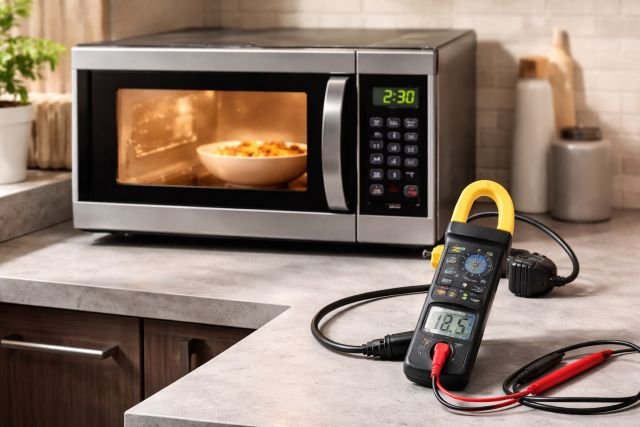
If you’ve ever wondered how many amps does a microwave use, you’re not alone. Microwaves are one of the most commonly used kitchen appliances, yet many homeowners don’t fully understand their electrical requirements. Knowing the amperage your microwave draws is essential for preventing circuit overloads, ensuring safe operation, and optimizing energy efficiency.
- What Does “Amps” Mean for a Microwave?
- How Many Amps Does a Microwave Use?
- Why Microwave Amperage Matters
- Factors That Affect Microwave Amp Usage
- Do Microwaves Need a Dedicated Circuit?
- How to Calculate Your Microwave’s Amps
- Can You Run a Microwave on a 15-Amp Circuit?
- What Happens If You Exceed Amp Limits?
- Energy Consumption vs Amp Usage
- Real-Life Example: Microwave in a Busy Kitchen
- Tips to Reduce Microwave Electrical Load
- Common Questions About Microwave Amps
- Expert Insights: Choosing the Right Microwave
- Conclusion
In this detailed guide, we’ll break down exactly how many amps a microwave uses, what factors affect its power consumption, and how you can safely run it in your home. Whether you’re installing a new unit or troubleshooting electrical issues, this article will give you practical, expert-level insights.
What Does “Amps” Mean for a Microwave?
Before diving into numbers, it’s important to understand what amperage actually represents. Amps (amperes) measure the amount of electrical current flowing through a device. In simple terms, it tells you how much electricity your microwave pulls from your home’s electrical system.
Most homes operate on a standard voltage of 120 volts (in countries like the U.S.), and the relationship between watts, volts, and amps is:
Amps = Watts ÷ Volts
This formula helps determine how much current your microwave needs to function properly.
How Many Amps Does a Microwave Use?
Average Amp Usage of Microwaves
A typical household microwave uses between 10 to 15 amps. However, this range can vary depending on the microwave’s wattage and efficiency.
Here’s a general breakdown:
- A 700-watt microwave uses around 6–7 amps
- A 1000-watt microwave uses about 8–9 amps
- A 1200-watt microwave uses approximately 10–11 amps
- High-power models (1500 watts) can draw up to 12–15 amps
Since most kitchen circuits are rated at 15 or 20 amps, a microwave often uses a significant portion of that capacity.
Why Microwave Amperage Matters
Understanding how many amps does a microwave use is crucial for several reasons.
First, it helps prevent circuit overloads. If your microwave shares a circuit with other appliances, you could easily exceed the limit, causing breakers to trip.
Second, it ensures electrical safety. Overloaded circuits can lead to overheating and even fire hazards.
Third, it helps with proper installation. Many modern microwaves require a dedicated circuit to operate efficiently.
According to the U.S. Department of Energy, proper appliance usage and circuit management can significantly reduce household electrical risks and improve energy efficiency.
Factors That Affect Microwave Amp Usage
Microwave Wattage
The higher the wattage, the more amps your microwave will draw. Wattage is the biggest factor influencing electrical consumption.
Voltage Supply
Most homes use 120 volts, but some larger appliances may use 220 volts. If voltage increases, amperage decreases for the same wattage.
Efficiency of the Microwave
Newer models are more energy-efficient, meaning they may use fewer amps for the same output.
Cooking Settings
Running your microwave at full power draws more amps than using lower settings like defrost or reheat.
Additional Features
Microwaves with grills, convection modes, or smart features may consume more power.
Do Microwaves Need a Dedicated Circuit?
In many cases, yes. Electricians often recommend a dedicated circuit for microwaves, especially for models above 1000 watts.
A dedicated circuit ensures:
- Stable power supply
- Reduced risk of tripping breakers
- Longer appliance lifespan
The National Electrical Code (NEC) suggests that fixed kitchen appliances like microwaves should have their own circuit to ensure safety and compliance.
How to Calculate Your Microwave’s Amps
If you want an exact number, you can calculate it using the wattage listed on your microwave.
For example:
A 1200-watt microwave on a 120-volt circuit:
Amps = 1200 ÷ 120 = 10 amps
This simple calculation gives you a clear idea of your appliance’s electrical demand.
Can You Run a Microwave on a 15-Amp Circuit?
Yes, but with caution.
A microwave using 10–12 amps can run on a 15-amp circuit, but you should avoid using other high-power appliances on the same circuit at the same time.
For example, running a toaster or coffee maker alongside your microwave could overload the circuit.
What Happens If You Exceed Amp Limits?
If your microwave draws more amps than your circuit can handle, several issues can occur.
The most common problem is a tripped circuit breaker. This is actually a safety feature designed to prevent overheating.
In more serious cases, overloaded circuits can lead to:
- Damaged wiring
- Appliance malfunction
- Increased fire risk
According to the Electrical Safety Foundation International (ESFI), electrical failures are a leading cause of home fires, making proper load management essential.
Energy Consumption vs Amp Usage
While amps measure current, energy consumption is measured in kilowatt-hours (kWh). Understanding both helps you manage your electricity bills.
For example, a 1000-watt microwave running for one hour uses 1 kWh of electricity.
However, since microwaves are typically used for short periods, their overall energy cost is relatively low compared to appliances like refrigerators or air conditioners.
Real-Life Example: Microwave in a Busy Kitchen
Imagine a household where the microwave is used alongside a refrigerator, blender, and electric kettle.
If all these appliances share the same circuit, the total amp draw could easily exceed 20 amps, causing frequent breaker trips.
By placing the microwave on a dedicated circuit, you eliminate this problem and ensure smooth operation.
Tips to Reduce Microwave Electrical Load
Understanding how many amps does a microwave use allows you to optimize your usage.
Avoid running multiple high-power appliances simultaneously. This reduces strain on your electrical system.
Use energy-efficient models. Modern microwaves are designed to deliver the same performance with lower power consumption.
Check your wiring. Older homes may not be equipped to handle modern appliances, so upgrading your electrical system can improve safety.
Common Questions About Microwave Amps
How many amps does a 1000-watt microwave use?
A 1000-watt microwave typically uses around 8–9 amps on a 120-volt circuit.
Is 15 amps enough for a microwave?
Yes, but it’s best to avoid sharing the circuit with other appliances.
Can a microwave trip a breaker?
Yes, especially if the circuit is overloaded or the microwave draws close to the maximum capacity.
Do smaller microwaves use fewer amps?
Generally, yes. Compact microwaves with lower wattage consume less current.
Expert Insights: Choosing the Right Microwave
When selecting a microwave, consider not just the size and features, but also its electrical requirements.
A high-wattage microwave may cook faster, but it also requires more amps. Balancing performance and energy efficiency is key.
If your kitchen wiring is limited, opting for a lower-wattage model can prevent electrical issues while still meeting your cooking needs.
Conclusion
Understanding how many amps does a microwave use is essential for maintaining a safe and efficient home. Most microwaves draw between 10 and 15 amps, depending on their wattage and features.
By knowing your microwave’s electrical requirements, you can avoid overloaded circuits, reduce safety risks, and ensure optimal performance. Whether you’re upgrading your kitchen or simply trying to manage your energy usage better, this knowledge empowers you to make smarter decisions.
Always remember: when in doubt, consult a licensed electrician to ensure your home’s electrical system can handle your appliances safely.