



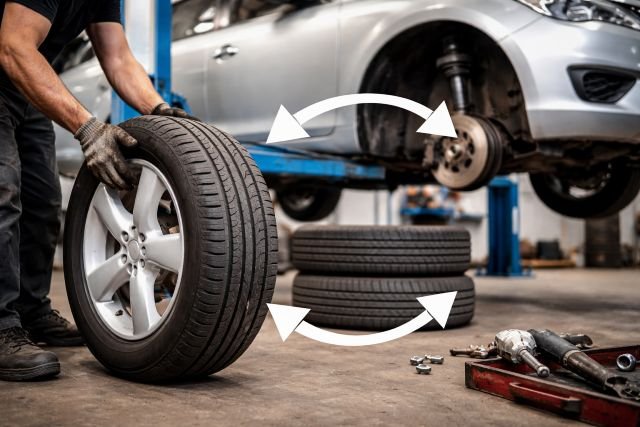
If you drive a car with front wheel drive tire rotation needs, you’ve probably heard that rotating your tires is important. But what most drivers don’t realize is that how and when you rotate them can dramatically affect tire lifespan, fuel efficiency, and even safety. Mechanics often stick to basic advice, but there are deeper insights that can save you money and extend your tires’ life significantly.
- Why Front Wheel Drive Tire Rotation Matters More Than You Think
- The Standard Tire Rotation Pattern (And Why It’s Not Always Enough)
- How Often Should You Rotate Front Wheel Drive Tires?
- Secret #1: Rotation Timing Matters More Than Mileage
- Secret #2: Front Tires Wear Faster — But Not Always Evenly
- Secret #3: Rotation Can Improve Fuel Efficiency
- Secret #4: Not All Tires Should Be Rotated the Same Way
- Secret #5: Tire Rotation Helps Detect Bigger Problems Early
- Best Rotation Pattern for Front Wheel Drive Vehicles
- Common Mistakes Drivers Make
- FAQs About Front Wheel Drive Tire Rotation
- Expert Tips for Maximum Tire Life
- Conclusion: Mastering Front Wheel Drive Tire Rotation
In this guide, you’ll uncover the lesser-known strategies behind front wheel drive tire rotation, backed by real-world insights, expert recommendations, and practical examples.
Why Front Wheel Drive Tire Rotation Matters More Than You Think
Front-wheel-drive (FWD) vehicles put more stress on the front tires than the rear ones. This is because the front tires handle:
- Steering
- Acceleration
- Most of the braking force
According to the National Highway Traffic Safety Administration (NHTSA), uneven tire wear is one of the leading causes of reduced vehicle stability and increased stopping distance.
Because of this imbalance, failing to properly perform front wheel drive tire rotation can lead to premature tire replacement — sometimes up to 30% sooner than expected.
The Standard Tire Rotation Pattern (And Why It’s Not Always Enough)
Most mechanics recommend a simple forward cross pattern:
- Front tires move straight back
- Rear tires move diagonally to the front
While this method works, it’s not always optimal for every situation.
The Hidden Truth
Mechanics often don’t tell you that tire rotation patterns should change based on:
- Driving habits
- Road conditions
- Tire type (directional vs non-directional)
- Alignment issues
For example, if you frequently drive in stop-and-go city traffic, your front tires wear even faster due to constant braking and acceleration. In such cases, rotating more frequently than standard intervals becomes essential.
How Often Should You Rotate Front Wheel Drive Tires?
Most manufacturers recommend rotating tires every 5,000 to 8,000 miles. However, this is a generalized guideline.
Real-World Insight
If you drive aggressively or on rough roads, consider rotating every 4,000–5,000 miles instead.
A study by Consumer Reports found that drivers who rotated their tires regularly extended tire life by up to 20%.
Secret #1: Rotation Timing Matters More Than Mileage
Here’s something mechanics rarely emphasize: timing matters just as much as distance.
If your driving includes:
- Heavy braking
- Sharp turns
- Hot climates
Your tires degrade faster — even if you haven’t hit the mileage mark.
Example Scenario
Two drivers both rotate at 6,000 miles:
- Driver A: Highway driving → minimal wear
- Driver B: City driving → heavy front tire wear
Driver B’s tires will still wear unevenly despite following the same schedule.
Pro Insight: Inspect your tires visually every month instead of relying only on mileage.
Secret #2: Front Tires Wear Faster — But Not Always Evenly
Most people assume both front tires wear equally. That’s not true.
Factors like:
- Road camber
- Turning habits
- Suspension alignment
…cause uneven wear between the left and right front tires.
What Mechanics Don’t Tell You
If one front tire is wearing faster than the other, a simple rotation won’t fix the root issue. You may need:
- Wheel alignment
- Suspension inspection
Ignoring this can reduce tire lifespan by thousands of miles.
Secret #3: Rotation Can Improve Fuel Efficiency
This is one of the most overlooked benefits of front wheel drive tire rotation.
Uneven tires increase rolling resistance, which forces your engine to work harder.
While that may seem small, over a year, it can add up significantly — especially with rising fuel costs.
Secret #4: Not All Tires Should Be Rotated the Same Way
There are three main types of tires:
- Directional tires
- Non-directional tires
- Staggered setups
Why This Matters
Directional tires can only rotate front-to-back on the same side. Crossing them incorrectly can:
- Reduce traction
- Increase wear
- Compromise safety
Many drivers unknowingly follow generic rotation advice, which can actually damage tire performance.
Secret #5: Tire Rotation Helps Detect Bigger Problems Early
Regular rotation isn’t just maintenance—it’s diagnostic.
When rotating tires, you can spot:
- Uneven tread wear
- Nail punctures
- Sidewall damage
- Alignment issues
Real-World Example
A driver rotating tires every 5,000 miles noticed unusual wear on one tire. After inspection, it revealed a suspension issue that could have led to a dangerous blowout.
Early detection saved both money and safety.
Best Rotation Pattern for Front Wheel Drive Vehicles
For most FWD cars with non-directional tires, the best method is:
- Move front tires straight to the rear
- Move rear tires diagonally to the front
This helps balance wear across all four tires.
Advanced Tip
If your tires show uneven wear, consider a modified pattern or consult a specialist instead of blindly following standard rotation rules.
Common Mistakes Drivers Make
Ignoring Tire Pressure
Incorrect pressure leads to uneven wear — even if you rotate regularly.
Skipping Rotations
Many drivers wait until tires look worn, which is already too late.
Using Wrong Pattern
Applying the wrong rotation method can reduce tire life instead of extending it.
FAQs About Front Wheel Drive Tire Rotation
What is front wheel drive tire rotation?
Front wheel drive tire rotation is the process of moving tires to different positions on a vehicle to ensure even wear, especially since front tires handle most of the workload.
Can I rotate tires myself?
Yes, if you have:
- A jack
- Jack stands
- A torque wrench
However, improper installation can be dangerous, so professional help is recommended if unsure.
Does tire rotation really extend tire life?
Yes. Studies show it can extend tire lifespan by 15–20%, saving you hundreds of dollars over time.
What happens if I don’t rotate my tires?
You risk:
- Uneven tread wear
- Reduced traction
- Poor fuel efficiency
- Shorter tire lifespan
Expert Tips for Maximum Tire Life
- Check tire pressure monthly
- Rotate tires more frequently in harsh driving conditions
- Inspect tread depth regularly
- Address alignment issues immediately
- Avoid aggressive driving habits
These simple practices can dramatically increase tire lifespan and safety.
Conclusion: Mastering Front Wheel Drive Tire Rotation
Understanding front wheel drive tire rotation goes far beyond just switching tires around every few thousand miles. The real secrets lie in timing, driving conditions, tire types, and early detection of issues.
By applying these expert insights, you can:
- Extend tire life
- Improve fuel efficiency
- Enhance driving safety
- Save money in the long run
Most importantly, you’ll avoid the common mistakes that many drivers—and even some mechanics—overlook.