



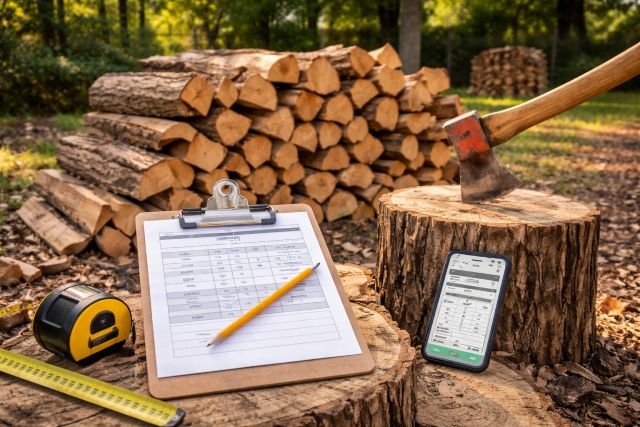
If you rely on firewood for heating or outdoor use, understanding how much wood you actually need can save you time, money, and frustration. A cord of wood is the standard measurement for firewood, but estimating your needs without a clear method can be tricky. That’s where a cord of wood calculator becomes invaluable.
- What Is a Cord of Wood?
- Why Use a Cord of Wood Calculator?
- How Much Is One Cord of Wood Worth?
- How to Calculate Firewood Needs
- Cord of Wood Calculator Example
- Types of Firewood and Their Impact
- Cost of a Cord of Wood
- Common Mistakes When Estimating Firewood
- Tips for Accurate Firewood Estimation
- Frequently Asked Questions
- Conclusion
In this guide, we’ll break down everything you need to know about calculating firewood requirements, how a cord of wood works, and how to accurately estimate your usage for the season. Whether you’re heating your home or stocking up for camping trips, this article will help you make smarter decisions.
What Is a Cord of Wood?
A cord of wood is a standardized unit of measurement used in the United States and other regions to quantify firewood. It equals a stack measuring:
- 4 feet high
- 4 feet wide
- 8 feet long
This totals 128 cubic feet of wood, including air gaps between logs.
Understanding this measurement is critical because firewood is often sold in fractions of a cord, such as half cords or face cords. A face cord, for example, is typically one-third of a full cord but can vary depending on log length.
According to the U.S. Department of Energy, firewood remains a primary heating source for millions of households, making accurate measurement essential for efficiency and budgeting (source: energy.gov).
Why Use a Cord of Wood Calculator?
Estimating firewood needs manually can lead to overbuying or running out mid-season. A cord of wood calculator simplifies this process by factoring in:
- Home size
- Climate conditions
- Heating efficiency
- Frequency of use
Using a calculator ensures you get a realistic estimate tailored to your specific situation.
Benefits of Using a Calculator
A cord of wood calculator offers several advantages:
- It prevents waste by avoiding excess purchases.
- It helps you budget accurately for winter heating.
- It ensures you have enough wood to last the season.
- It accounts for variables like insulation and stove efficiency.
For example, a poorly insulated home in a cold climate may require twice as much firewood as a well-insulated home in a mild region.
How Much Is One Cord of Wood Worth?
The value of a cord of wood depends on wood type, location, and demand. Hardwood species like oak or maple burn longer and produce more heat, making them more valuable than softwoods like pine.
Average Heat Output
Different woods produce varying amounts of heat, measured in BTUs (British Thermal Units):
- Oak: ~24–30 million BTUs per cord
- Maple: ~20–25 million BTUs per cord
- Pine: ~15–20 million BTUs per cord
According to the U.S. Energy Information Administration (EIA), hardwoods are generally more efficient for heating due to their higher energy density (source: eia.gov).
How to Calculate Firewood Needs
A cord of wood calculator typically uses a combination of factors to estimate your needs. Here’s how the process works.
Step 1: Determine Your Heating Area
The size of your home plays a major role. Larger spaces require more heat, which translates to more firewood.
- Small homes (under 1,000 sq ft): 1–2 cords per season
- Medium homes (1,000–2,500 sq ft): 2–4 cords
- Large homes (2,500+ sq ft): 4–6 cords
Step 2: Consider Climate
Climate significantly impacts wood consumption. Colder regions require more firewood.
- Mild climates: 1–2 cords
- Moderate climates: 2–4 cords
- Cold climates: 4–7 cords
Step 3: Evaluate Insulation
Well-insulated homes retain heat better, reducing wood usage. Poor insulation increases demand.
Step 4: Account for Stove Efficiency
Modern wood stoves are far more efficient than older models. EPA-certified stoves can reduce wood consumption by up to 30% (source: epa.gov).
Cord of Wood Calculator Example
Let’s look at a real-world scenario.
Imagine a 2,000 sq ft home in a cold climate with average insulation and a modern wood stove.
- Base requirement: 3 cords
- Climate adjustment: +1 cord
- Efficiency savings: -0.5 cord
Estimated total: 3.5 cords for the season
This type of calculation is exactly what a cord of wood calculator automates, saving you time and guesswork.
Types of Firewood and Their Impact
Not all firewood is created equal. The type of wood you choose directly affects how much you need.
Hardwood vs Softwood
Hardwoods are denser and burn longer, making them ideal for heating. Softwoods ignite quickly but burn faster.
Hardwoods like oak, hickory, and ash are best for long-term heating. Softwoods like pine and spruce are better for kindling or short fires.
Seasoned vs Green Wood
Seasoned wood has been dried for at least 6–12 months, reducing moisture content. Green wood contains more moisture and burns less efficiently.
Using seasoned wood can improve heat output by up to 25%, according to forestry experts (source: USDA Forest Service).
Cost of a Cord of Wood
The price of a cord of wood varies depending on location and wood type.
Average Prices
- Hardwood: $200–$400 per cord
- Softwood: $150–$300 per cord
Prices tend to rise during winter due to increased demand. Buying in the off-season can save money.
Common Mistakes When Estimating Firewood
Many homeowners make errors when calculating their firewood needs. Avoiding these mistakes can improve accuracy.
Overestimating Needs
Buying too much wood leads to storage issues and potential waste if wood deteriorates.
Ignoring Efficiency
Failing to consider stove efficiency or insulation can result in inaccurate estimates.
Misunderstanding Measurements
Confusing a face cord with a full cord is a common mistake that leads to underestimating supply.
Tips for Accurate Firewood Estimation
To get the most accurate results from a cord of wood calculator, consider these practical tips.
Measure Your Space Carefully
Accurate square footage ensures better estimates.
Track Past Usage
If you’ve used firewood before, review previous consumption to refine your estimate.
Use Reliable Tools
Online calculators from trusted sources like forestry departments or energy agencies provide better accuracy.
Frequently Asked Questions
How many cords of wood do I need for winter?
Most homes require between 2 and 5 cords per winter, depending on size, climate, and insulation.
Is a face cord the same as a cord of wood?
No, a face cord is typically one-third of a full cord, depending on log length.
How long does a cord of wood last?
A cord of wood can last anywhere from a few weeks to an entire season, depending on usage.
Can I use green wood?
It’s not recommended. Green wood burns inefficiently and produces more smoke.
Conclusion
A cord of wood calculator is one of the most effective tools for estimating your firewood needs quickly and accurately. By understanding how a cord of wood is measured and factoring in variables like climate, home size, and efficiency, you can avoid costly mistakes and ensure a comfortable heating season.
Whether you’re a first-time buyer or a seasoned wood user, taking the time to calculate your needs properly will save money, reduce waste, and improve overall heating efficiency. Investing in the right amount of firewood isn’t just practical — it’s essential for a warm and stress-free winter.