



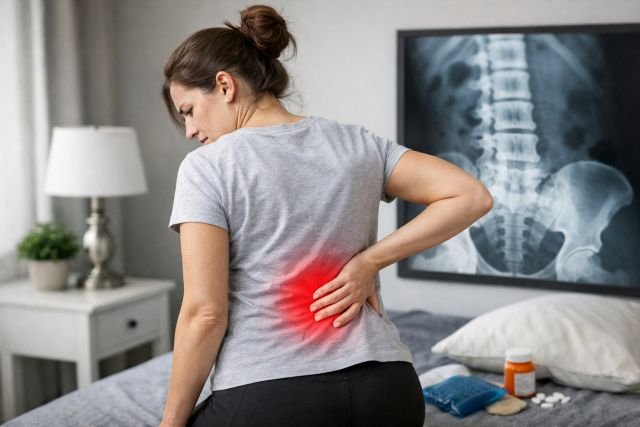
Experiencing right lower back pain female is more common than many realize, yet it often raises an important question: Is this normal, or something serious? For women, lower back pain can stem from a wide range of causes — from simple muscle strain to underlying medical conditions linked to reproductive or urinary health.
In fact, studies suggest that nearly 80% of adults experience back pain at some point, with women being slightly more prone due to hormonal, anatomical, and lifestyle factors (National Institute of Neurological Disorders and Stroke).
Understanding the root cause is essential. This guide will help you identify whether your pain is harmless or a warning sign, and what steps you should take next.
What Does Right Lower Back Pain Mean in Females?
Right lower back pain refers to discomfort located on the right side of the lumbar region. In females, this area overlaps with several critical organs including:
- Kidneys
- Reproductive organs (ovaries, fallopian tubes)
- Intestinal structures
Because of this, pain in this region can be either musculoskeletal (most common) or organ-related (sometimes serious).
Common Causes of Right Lower Back Pain in Females
1. Muscle Strain or Poor Posture
The most frequent cause of right lower back pain female is muscle strain. This can occur due to:
- Lifting heavy objects incorrectly
- Sitting for long hours
- Poor posture during work or sleep
Pain from muscle strain is usually dull, aching, and worsens with movement.
2. Menstrual Cycle and Hormonal Changes
Hormonal fluctuations during menstruation can trigger back pain.
- Prostaglandins (hormone-like substances) cause uterine contractions
- Pain may radiate to the lower back, often on one side
This type of pain is usually temporary and occurs around the menstrual cycle.
3. Ovulation Pain (Mittelschmerz)
Some women feel pain on one side during ovulation.
- Occurs mid-cycle
- Can cause sharp or cramping pain in the lower abdomen and back
If your right lower back pain female appears around ovulation, this could be the reason.
4. Kidney Issues (Infections or Stones)
Pain on the right side may indicate a kidney problem.
- Kidney infection (pyelonephritis): accompanied by fever, nausea, burning urination
- Kidney stones: sharp, severe pain that may radiate to the groin
According to the National Kidney Foundation, kidney stones affect about 1 in 10 people globally.
5. Endometriosis
Endometriosis occurs when tissue similar to the uterine lining grows outside the uterus.
- Causes chronic pelvic and back pain
- Pain may worsen during periods
- Often affects women aged 25–40
6. Ovarian Cysts
Cysts on the right ovary can cause localized pain.
- Often asymptomatic but can become painful if ruptured
- Pain may be sharp or sudden
7. Sciatica
Sciatica occurs when the sciatic nerve is compressed.
- Pain radiates from lower back down the leg
- Usually affects one side (right or left)
8. Pregnancy-Related Changes
During pregnancy, the body undergoes major changes:
- Increased weight
- Shift in center of gravity
- Hormonal ligament relaxation
These can all contribute to right lower back pain in females, especially in later stages.
When Is Right Lower Back Pain Serious?
Not all back pain is harmless. You should take right lower back pain female seriously if you experience:
- Severe or worsening pain
- Fever or chills
- Pain during urination
- Numbness or weakness in legs
- Unexplained weight loss
- Pain lasting more than 2 weeks
These symptoms could indicate underlying medical conditions that require immediate attention.
How to Diagnose the Cause
Doctors typically use a combination of:
- Physical examination
- Medical history
- Imaging tests (X-rays, MRI, CT scans)
- Urine or blood tests
Early diagnosis is key to preventing complications.
Treatment Options for Right Lower Back Pain Female
1. Home Remedies
For mild cases, you can try:
- Rest and proper posture
- Heat or cold therapy
- Gentle stretching exercises
2. Medications
Doctors may prescribe:
- Pain relievers (ibuprofen, acetaminophen)
- Muscle relaxants
- Antibiotics (for infections)
3. Physical Therapy
A physiotherapist can:
- Strengthen back muscles
- Improve posture
- Reduce recurrence
4. Medical Procedures
For serious conditions:
- Surgery (in rare cases like severe herniated discs)
- Treatment for underlying conditions (e.g., endometriosis, kidney stones)
Preventing Right Lower Back Pain
Prevention plays a huge role in managing long-term health.
Focus on:
- Maintaining proper posture
- Regular exercise (especially core strengthening)
- Staying hydrated
- Managing weight
- Avoiding prolonged sitting
Real-Life Scenario
Consider Sarah, a 32-year-old office worker. She experienced persistent right lower back pain female for weeks. Initially, she assumed it was due to poor posture. However, when the pain intensified and was accompanied by fever, she sought medical help.
Diagnosis revealed a kidney infection. Early treatment prevented serious complications.
This highlights the importance of not ignoring persistent symptoms.
FAQs
Is right lower back pain normal in females?
Yes, it can be normal if caused by muscle strain, menstruation, or posture. However, persistent or severe pain may indicate a medical issue.
What organ is on the right lower back in females?
The right kidney, parts of the intestine, and reproductive organs like the right ovary are located in this region.
When should I worry about lower right back pain?
You should worry if the pain is severe, long-lasting, or accompanied by symptoms like fever, nausea, or numbness.
Can right lower back pain be related to periods?
Yes, hormonal changes during menstruation can cause back pain, sometimes localized on one side.
Conclusion
Understanding right lower back pain female is crucial for distinguishing between normal discomfort and serious health concerns. While many cases are harmless and related to muscle strain or hormonal changes, others may signal conditions like kidney infections, endometriosis, or ovarian cysts.
The key is awareness. Pay attention to your symptoms, and don’t ignore persistent or worsening pain. Early diagnosis and proper treatment can make a significant difference in your overall health and quality of life.
If in doubt, always consult a healthcare professional — because when it comes to your health, it’s better to be safe than sorry.