



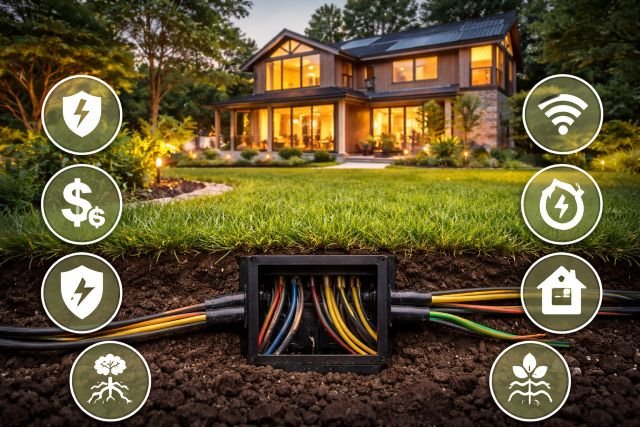
In today’s rapidly evolving housing landscape, homeowners are increasingly turning toward smarter and safer electrical solutions. One such innovation gaining popularity is underground wire installation. Unlike traditional overhead wiring, underground wiring systems offer a more secure, aesthetically pleasing, and long-lasting solution for modern homes.
- What Is Underground Wire?
- Why Modern Homes Prefer Underground Wire Systems
- 1. Enhanced Safety for Families and Property
- 2. Improved Aesthetic Appeal
- 3. Increased Reliability and Fewer Power Outages
- 4. Reduced Maintenance Costs Over Time
- 5. Protection Against Weather and Environmental Damage
- 6. Higher Property Value and Market Appeal
- 7. Better Energy Efficiency
- 8. Minimal Risk of Theft or Vandalism
- 9. Safer During Natural Disasters
- 10. Supports Smart Home and Modern Technology Integration
- Common Questions About Underground Wire
- Real-World Example: Modern Housing Societies
- Conclusion: Why Underground Wire Is the Future of Modern Homes
From improved safety to enhanced property value, underground wire systems are transforming how electricity is distributed in residential areas. Whether you’re building a new home or upgrading an existing one, understanding the benefits of underground wiring can help you make an informed decision.
What Is Underground Wire?
Underground wire refers to electrical cables that are installed beneath the ground rather than suspended on poles above ground. These cables are typically insulated and protected with durable materials to withstand environmental conditions such as moisture, pressure, and temperature fluctuations.
This method of electrical distribution is commonly used in modern housing societies, urban developments, and smart city projects where safety, reliability, and aesthetics are prioritized.
Why Modern Homes Prefer Underground Wire Systems
Modern homes are designed with efficiency, sustainability, and safety in mind. Underground wire systems align perfectly with these goals by reducing risks associated with exposed electrical lines while improving the overall visual appeal of residential areas.
According to the U.S. Department of Energy, underground power lines experience fewer outages caused by weather conditions compared to overhead lines. This makes them a reliable option for homeowners seeking uninterrupted electricity supply.
1. Enhanced Safety for Families and Property
One of the most significant advantages of using underground wire is improved safety. Overhead wires are exposed to external elements such as storms, falling trees, and accidental contact, which can lead to dangerous situations.
Underground wiring eliminates these risks by keeping electrical cables safely buried. This reduces the chances of electric shocks, fire hazards, and accidents, especially in areas with children or pets.
In regions prone to extreme weather, such as heavy winds or lightning, underground systems provide an extra layer of protection, ensuring your home remains secure.
2. Improved Aesthetic Appeal
Modern homeowners value clean and clutter-free surroundings. Overhead wires can create visual clutter, making neighborhoods look untidy.
Underground wire systems contribute to a more polished and organized appearance. Without visible cables hanging across streets, the overall look of your property and community improves significantly.
This is particularly beneficial in upscale housing societies and urban developments where visual appeal plays a major role in property valuation.
3. Increased Reliability and Fewer Power Outages
Power outages can be frustrating and disruptive. One of the key benefits of underground wire is its reliability.
Since the cables are protected beneath the ground, they are less likely to be affected by weather conditions such as storms, heavy rain, or snowfall. According to research by the Electric Power Research Institute (EPRI), underground systems experience significantly fewer outages compared to overhead lines.
This means more consistent power supply and fewer interruptions in your daily life.
4. Reduced Maintenance Costs Over Time
While the initial installation cost of underground wire may be higher, it often results in lower maintenance expenses in the long run.
Overhead wires require frequent inspections and repairs due to exposure to environmental factors. In contrast, underground cables are protected from physical damage, reducing the need for regular maintenance.
This long-term cost efficiency makes underground wiring a smart investment for homeowners planning for the future.
5. Protection Against Weather and Environmental Damage
Weather is one of the biggest threats to traditional electrical systems. Strong winds, lightning, ice accumulation, and falling branches can easily damage overhead wires.
Underground wire systems are shielded from these hazards. By being installed beneath the surface, they remain unaffected by most environmental conditions.
This durability ensures a stable and uninterrupted power supply, even during extreme weather events.
6. Higher Property Value and Market Appeal
Homes equipped with underground wire systems often have a higher market value. Buyers are increasingly looking for properties that offer safety, reliability, and modern infrastructure.
A home with underground wiring is seen as more advanced and secure, making it more attractive to potential buyers. Real estate experts often highlight this feature as a premium upgrade.
If you plan to sell your property in the future, underground wiring can serve as a strong selling point.
7. Better Energy Efficiency
Underground wire systems can also contribute to improved energy efficiency. Since these cables are insulated and protected, they experience fewer energy losses compared to overhead lines.
Reduced exposure to temperature variations and environmental factors helps maintain consistent electrical performance.
This efficiency can lead to lower electricity bills over time, making it both an economical and eco-friendly choice.
8. Minimal Risk of Theft or Vandalism
Electrical theft and vandalism are common issues in some areas. Overhead wires are easier targets for tampering and illegal connections.
Underground wire systems significantly reduce this risk. Since the cables are buried and not easily accessible, unauthorized access becomes difficult.
This added security ensures uninterrupted power supply and reduces the chances of electrical faults caused by illegal interference.
9. Safer During Natural Disasters
Natural disasters such as storms, earthquakes, and floods can severely impact electrical infrastructure.
While no system is completely immune, underground wire systems are generally more resilient. They are less likely to be damaged by strong winds or flying debris.
According to the Federal Emergency Management Agency (FEMA), underground utilities often perform better during severe weather events compared to overhead systems.
This resilience makes underground wiring a reliable option for disaster-prone regions.
10. Supports Smart Home and Modern Technology Integration
Modern homes increasingly rely on smart technologies, including home automation systems, security devices, and energy management tools.
Underground wire systems provide a stable and consistent power supply, which is essential for these technologies to function efficiently.
Additionally, underground infrastructure supports future upgrades, making it easier to integrate new technologies without major disruptions.
Common Questions About Underground Wire
Is underground wire more expensive than overhead wiring?
Yes, the initial installation cost of underground wire is typically higher due to excavation and specialized materials. However, the long-term savings on maintenance and repairs often offset this cost.
How long does underground wiring last?
Underground cables can last 25 to 50 years or more, depending on the quality of materials and installation. Proper insulation and protection play a key role in their longevity.
Is underground wiring completely safe?
While no system is entirely risk-free, underground wire is significantly safer than overhead wiring. It minimizes exposure to environmental hazards and reduces the risk of accidents.
Can underground wires be repaired easily?
Repairs can be more complex than overhead systems since the cables are buried. However, modern detection technologies make it easier to locate and fix issues efficiently.
Real-World Example: Modern Housing Societies
Many modern housing societies and gated communities now use underground wire systems as a standard feature. For instance, smart city projects in countries like the UAE and Singapore have adopted underground electrical infrastructure to improve safety and aesthetics.
These developments demonstrate how underground wiring contributes to a more organized, reliable, and future-ready living environment.
Conclusion: Why Underground Wire Is the Future of Modern Homes
The shift toward underground wire systems is not just a trend — it’s a necessity for modern living. With benefits ranging from enhanced safety and reliability to improved aesthetics and property value, underground wiring offers a comprehensive solution for today’s homeowners.
As cities continue to evolve and smart technologies become more integrated into daily life, the demand for efficient and secure electrical systems will only grow. Investing in underground wire is a forward-thinking decision that ensures long-term comfort, safety, and value.
If you’re planning to build or upgrade your home, consider making underground wiring a priority. It’s not just about electricity — it’s about creating a safer, smarter, and more sustainable living environment.