


A slide water slide is already one of the fastest ways to make your backyard feel like summer vacation. But if you’ve ever set one up and thought, “Why does this feel a little… meh?” — you’re not alone. Most backyard water slides are built to be simple: unroll, hook up the hose, start sliding.
- What counts as a “slide water slide”?
- Slide water slide upgrades that instantly boost speed and “ride quality”
- The “big splash finish” that makes it feel like a water park
- Comfort upgrades that make the slide feel expensive
- Themed upgrades: the secret sauce of “water park energy”
- Safety upgrades you should treat as non-negotiable
- Water-saving tips that don’t ruin the fun
- Example setups
- FAQ
- Conclusion: turn your slide water slide into a backyard “mini resort”
The good news is you can get a real water-park vibe with a handful of inexpensive upgrades — no construction crew, no permanent pool, and no complicated plumbing. Below, I’ll walk you through the best budget-friendly improvements for speed, splash, comfort, and safety, plus a few smart water-use tips so you’re not accidentally running a mini fire hydrant all afternoon.
Along the way, I’ll also cover common questions people ask about backyard slides (and what safety organizations recommend), because “more fun” should never mean “more risk.” Drowning is a serious hazard around any water activity — CDC notes that more children ages 1–4 die from drowning than any other cause of death, and there are over 4,000 unintentional drowning deaths each year in the U.S.
What counts as a “slide water slide”?
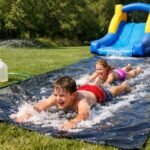
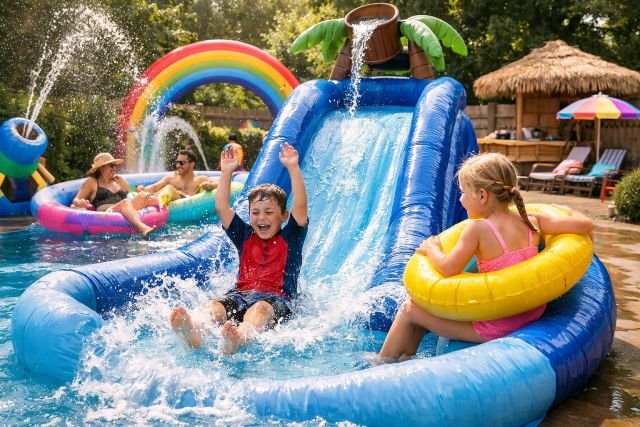
A slide water slide is any backyard slide designed to be used with running water — think Slip ’N Slide-style lanes, inflatable slides with splash pools, or slide-and-splash mats that connect to a garden hose. Most use a thin film of water for speed and cooling, and the fun usually comes down to two things:
- how smoothly water spreads across the surface, and
- how satisfying the “finish” feels (the splash, landing, or pool).
That’s exactly what the upgrades below target.
Slide water slide upgrades that instantly boost speed and “ride quality”
1) Upgrade the water flow (without buying a whole new slide)
If the slide feels slow or “sticky,” it’s usually not the plastic — it’s uneven water coverage.
A cheap fix is adding a hose splitter and a second water feed line so water hits more than one section. You’re essentially mimicking a water park’s multi-point spray system, just scaled down.
Pro tip: If your slide already has sprayer holes, make sure they’re facing the sliding surface (it sounds obvious, but twists happen during setup). If the spray is arcing outward instead of laying a sheet of water, you’re losing speed.
2) Add a slippery-but-skin-safe boost
Most people reach for soap. It works… and then it dries skin out, irritates eyes, and turns your yard into a slippery hazard.
A better approach:
- Use purpose-made “slide lubricant” products (often labeled safe for inflatable slides / backyard water slides).
- Or go super minimal with a tiny amount of gentle, tear-free wash diluted heavily in a bucket and poured along the lane (not dumped in a puddle at the end).
Keep it light. The goal is a smoother film, not a foam party.
3) Flatten the runway (this matters more than you think)
Wrinkles and dips are speed killers. Before you even turn on the hose:
- Pull the slide tight.
- Stake it evenly (not just at the corners).
- If the ground is lumpy, put a tarp or thin foam play mats under the run-up area to reduce friction points.
This one upgrade makes a cheap slide feel dramatically more “premium.”
The “big splash finish” that makes it feel like a water park
4) Create a real splash zone at the end
Water parks are memorable because the ride has a payoff: a plunge pool, a big splashdown, or a run-out that sends water flying.
Here are a few budget-friendly finish upgrades:
- Shallow splash pool: A small inflatable kiddie pool at the end can transform the experience. Keep water depth appropriate for the kids using it, and treat it like a serious water environment (constant supervision).
- Tarp “splash apron”: Place a plastic tarp under/around the landing zone to catch and recirculate water (and reduce mud).
- Soft stop zone: Use thick foam play mats beside (not on) the slide surface to cushion tumbles.
Safety matters here. The Consumer Product Safety Commission (CPSC) has warned that some backyard water slides are designed for children only, and adult/teen use can lead to severe neck injuries due to higher body weight and speed.
5) Add a mini “wave wall” with a sprinkler arc
If you want that water-park sensory moment, set a yard sprinkler to arc across the last third of the lane. The feeling of sliding through a water curtain is surprisingly “theme park.”
Keep the sprinkler base well away from the slide path so nobody hits it.
Comfort upgrades that make the slide feel expensive
6) Make it softer without making it slower
Hard ground underneath makes any slide feel cheap. But thick padding on the lane can add friction.
The sweet spot is:
- A thin tarp under the slide for smoothness, plus
- Cushioning beside the slide where kids step, run, and fall.
This reduces scrapes while keeping the sliding surface fast.
7) Shade + cooldown = longer playtime
If the sun bakes the plastic, the surface gets hot, and kids quit early.
A simple shade sail, pop-up canopy, or even a large patio umbrella near the start line can extend playtime and keep the vibe comfortable.
Themed upgrades: the secret sauce of “water park energy”
8) Turn your slide water slide into an “attraction”
A water park ride has a name, a theme, and a little hype. You can recreate that with almost no budget.
Try:
- A homemade “ride sign” (laminated paper or cardboard under clear tape).
- Colored pool noodles as “railings” along the edges (placed beside the lane, not on it).
- Battery-powered waterproof LED string lights for late-afternoon glow.
- A “lifeguard stand” vibe: one chair, one umbrella, one adult assigned as the dedicated watcher.
The CDC emphasizes how quickly drowning can happen and highlights risk factors like inadequate barriers and supervision.
Safety upgrades you should treat as non-negotiable
A backyard slide feels casual, but it’s still a water activity with real risks. The goal is to build layers of safety without killing the fun.
9) Use “layers,” not a single rule
The American Academy of Pediatrics recommends multiple layers of prevention around water, including close supervision and barriers like four-sided fencing around residential pools.
Even if you don’t have a pool, you can borrow the “layers” concept:
- One adult is the designated watcher (no phone scrolling).
- Slides end in shallow water only (if you use a pool).
- Clear “one at a time” rule for the lane.
- No diving, no head-first, no roughhousing in the landing zone.
The CDC notes that a four-sided isolation fence can reduce a child’s drowning risk by 83% compared to three-sided fencing (for pool access).
That’s a pool-specific stat, but it shows how much environment design can matter when water is involved.
10) Respect age and size limits (seriously)
If your slide water slide is designed for children, keep it that way. The CPSC has explicitly warned that certain backyard slides intended for children can be dangerous when used by teens and adults due to the risk of severe neck injury.
If adults want in on the fun, choose equipment rated for adult weight — and keep the landing zone extra long and clear.
Water-saving tips that don’t ruin the fun
A slide water slide can be surprisingly water-hungry if you run a hose full blast for hours. The EPA notes that residential outdoor water use in the U.S. is nearly 8 billion gallons per day, mainly for irrigation, and that many households use more water outdoors than for some major indoor uses combined.
That doesn’t mean you can’t run the slide — it just means you’ll feel better if you use water intentionally.
11) Use a timed “ride session” setup
Instead of leaving the hose running nonstop:
- Run 10–15 minute slide sessions.
- Turn the water off for 5 minutes while kids rotate snacks, sunscreen, and shade.
- Turn it back on for the next round.
The slide stays exciting, and you cut waste.
12) Recapture water when possible
If your slide ends near grass that’s already thirsty, route runoff toward landscaping (not the street). A tarp “splash apron” can help direct water to where it’s useful.
Example setups
Scenario A: The “$25 Water Park Feel” makeover
You start with a basic slide water slide mat. It’s fun, but it slows down halfway and the finish is underwhelming.
You add:
- a hose splitter to improve coverage,
- a sprinkler arc for a “water curtain,” and
- a shallow splash pool at the end.
Result: kids stop calling it “the slide” and start calling it “the ride.”
Scenario B: The “older kids” upgrade with safety baked in
You’ve got kids who want speed and competition.
You add:
- a longer run-out zone (tarp + smooth grass),
- clear lane rules (“one at a time”),
- a dedicated watcher chair in the shade,
- and you strictly enforce size/age limits on the slide itself.
Result: it feels more like a structured attraction, less like chaos.
FAQ
How do you make a slide water slide faster?
Make sure the surface stays evenly wet, flatten wrinkles, and improve water coverage using a hose splitter or better spray alignment. A thin tarp under the slide can also reduce friction.
Is soap safe to use on a backyard water slide?
A small amount of gentle, tear-free soap diluted heavily can work, but it may irritate eyes or skin for some kids. Slide-safe lubricants made for inflatables are usually a better option for comfort and cleanup.
Can adults use a slide water slide?
Only if the product is rated for adult use. The CPSC has warned that some backyard water slides are designed for children, and adult/teen use can increase the risk of serious neck injury.
How can I make the landing safer?
Create a longer run-out area, keep the end clear of obstacles, and add soft zones beside the lane where kids step and tumble. If you use a splash pool, keep it shallow and supervise constantly.
Do backyard water activities really need strict supervision?
Yes. CDC reports drowning risk is significant for young children, and drowning can happen quickly and quietly. Layers like active supervision and safe environments reduce risk.
Conclusion: turn your slide water slide into a backyard “mini resort”
A slide water slide doesn’t have to feel like a flimsy plastic mat on the lawn. With a few cheap upgrades — better water coverage, a real splash finish, simple theming, and a safer layout — you can recreate the parts of a water park that people actually remember: speed, splash, and that “again, again!” energy.
Just keep the fun paired with smart safety habits. Public health and pediatric safety groups emphasize layers of protection around water, and product safety agencies have specifically warned about adult/teen use on child-designed slides.