


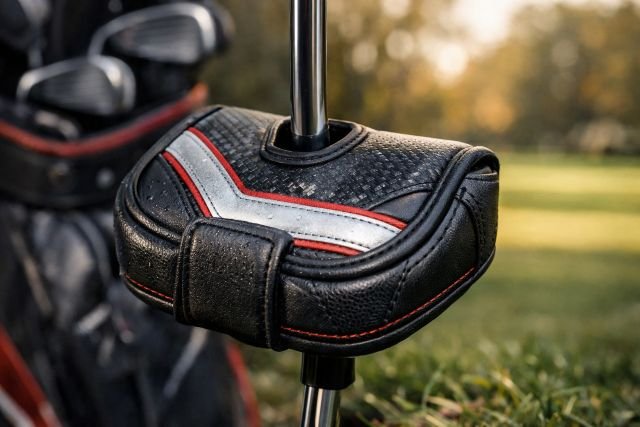
If you’ve ever pulled your putter out mid-season and found the cover’s seams splitting, the liner shredding, or the closure going loose, you already know the truth: a center shaft mallet putter cover takes more abuse than most golfers realize.
- What “durable” really means for a center shaft mallet putter cover
- Why center-shaft mallets chew through covers faster
- The most durable materials for a center shaft mallet putter cover
- Construction details that separate “tough” from “temporary”
- Closures that last: magnetic, Velcro, and zipper durability
- Fit: the hidden durability multiplier for center shaft mallets
- Real-world scenarios: what durability looks like in a full season
- Buying checklist: how to spot durability fast (even online)
- Maintenance tips to make any cover last longer
- FAQ
- Conclusion: choosing a center shaft mallet putter cover that truly lasts
It gets yanked on and off dozens of times a round, squeezed between irons, dragged across cart paths, soaked in morning dew, and stuffed into travel bags. And because a center-shafted mallet has its own shape and balance point, a “close enough” cover tends to twist, stretch, or wear faster at stress points.
This guide breaks down what actually makes a cover durable (not just “feels premium”), how to spot long-wearing construction, and how to choose the right fit for a center shaft mallet — so your next cover holds up season after season.
What “durable” really means for a center shaft mallet putter cover
A durable center shaft mallet putter cover isn’t just thick. Durability is the combination of three things:
- Abrasion resistance (the outer doesn’t scuff, fuzz, or tear when it rubs against other clubs or the bag opening). Fabrics like ballistic nylon are engineered specifically for enhanced tear and abrasion resistance.
- Fatigue resistance (the closure keeps working after thousands of open/close cycles, and the mouth doesn’t permanently stretch). Brands like YKK publicly document zipper durability and strength test methods used to evaluate long-term function.
- Structure retention (the cover keeps its shape so it slides on/off smoothly and continues to protect the head and shaft entry area).
If any one of these fails, you feel it immediately: the cover becomes annoying to use, and your putter becomes more exposed in the bag.
Why center-shaft mallets chew through covers faster
Center-shaft mallets create unique wear patterns compared to heel-shafted mallets and blades.
The shaft-entry zone gets stressed more
Because the shaft enters near the middle, the cover’s “throat” or cutout area takes repeated flexing. On cheaper covers, that’s where stitching pops or synthetic leather cracks first.
Twisting and dragging are more common
When the shaft is centered, golfers tend to pull the cover off at a slightly different angle, especially one-handed. That micro-twist adds up over hundreds of rounds.
Many “mallet covers” aren’t shaped for center shaft geometry
A generic mallet cover might technically fit, but the tension sits in the wrong places. Over time that leads to stretched panels, misaligned closures, and friction wear on corners.
The most durable materials for a center shaft mallet putter cover
Material choice is the foundation. Two covers can look similar online and perform wildly differently after three months of use.
Ballistic nylon and CORDURA-style nylons (best for abrasion)
If your priority is “I want this to survive cart golf, travel, and bad weather,” ballistic nylon is hard to beat.
CORDURA’s ballistic fabric is designed with high-tenacity nylon yarns for enhanced tear and abrasion resistance and has “military heritage” in its positioning.
Independent spec sheets for CORDURA-brand nylon used in military gear emphasize resistance to abrasion, tears, and tensile failures.
What this means on the course: less scuffing at the toe/heel corners, fewer punctures from sharp iron edges, and better longevity if you toss your bag in trunks, carts, and travel covers.
Full-grain leather (best for long-term aging, if maintained)
A well-made leather cover can last years and looks better over time — if it’s quality leather and stitched well. Many headcover material guides highlight full-grain leather as the premium durability option because it retains the strongest natural fibers.
Trade-off: leather can be less forgiving in repeated soaking/drying cycles if you don’t condition it, and cheaper “genuine leather” or thin leather panels may crack at folds.
Synthetic leather (PU) (best value if construction is strong)
High-quality PU can be surprisingly durable, especially when reinforced at stress points. Many golf headcover guides describe synthetic leather as a good balance of durability and weather resistance, often with lower maintenance than real leather.
Watch-outs: very cheap PU peels; the failure often starts where the cover creases at the opening.
Neoprene (good weather resistance, but can abrade)
Neoprene is popular because it’s stretchy, water-resistant, and easy to use. Many headcover material overviews point out neoprene’s protective, water-resistant nature.
Durability reality: neoprene can pill or wear faster when it repeatedly rubs against textured bag openings or rough clubheads. It’s “durable enough” for many golfers, but not always the best choice for maximum abrasion longevity.
Construction details that separate “tough” from “temporary”
Material matters, but construction is what decides whether a cover survives real use.
1) Reinforced seam strategy (double stitching where it counts)
For a center-shaft mallet, you want reinforcement at:
- the shaft-entry cutout (or center opening zone),
- the corners of the mallet “box,”
- the closure anchor points (magnets/Velcro/zipper ends).
Even a premium fabric fails if the seam thread is light or the seam allowance is narrow.
2) Liner choice: soft protection without shedding
A good liner prevents dings and keeps finishes from getting rubbed. Many mainstream golf headcover guides describe fleece-style liners as common for protection.
Durability tip: the liner should be tightly bonded or well-stitched so it doesn’t bunch up or shed fibers into your bag.
3) Padding: structured foam beats “puffy”
A durable cover doesn’t need to be huge. It needs padding that returns to shape after compression. Dense foam or structured padding keeps the cover easy to slide on and off, and it protects during travel.
If you travel with clubs, protection becomes even more important because minimizing handling and impact risk is a consistent theme in travel safety advice for golf gear.
Closures that last: magnetic, Velcro, and zipper durability
This is where many covers fail first.
Magnetic closures (fast and generally durable)
Magnetic headcovers are popular because they’re easy on/off with a satisfying “snap.” Major retailers market magnetic headcovers as secure and convenient.
How magnets fail: not usually the magnet itself — more often the stitching or glue pocket holding the magnet loosens over time. A durable cover will have the magnet pocket stitched and reinforced, not just heat-bonded.
Velcro (secure, but degrades with lint and wear)
Velcro works, but it tends to collect fuzz, and the hook side can wear down. If you walk a lot and your bag picks up grass debris, Velcro longevity can drop faster than you expect.
Zippers (very secure, but quality matters)
Zippers can be extremely durable when designed and tested well. YKK outlines standardized zipper testing approaches (including strength and durability-oriented methods) that manufacturers use to evaluate long-term function.
Golf-specific downside: zippers can scratch a club if poorly designed, and they’re more vulnerable to sand/dirt jams if you play in gritty conditions.
Best practice: if you choose a zippered cover, look for a protected zipper track and a soft zipper garage at the end.
Fit: the hidden durability multiplier for center shaft mallets
If the fit is wrong, even the best materials wear faster. Here’s what “right fit” looks like:
The cover should seat fully without forcing
If you have to stretch it hard every time, the opening will fatigue. If it’s too loose, it will rotate and rub — creating abrasion points that chew through the outer and liner.
Shaft-entry alignment must match your putter
A true center-shaft design should have:
- a centered notch or opening geometry that doesn’t bend the shaft,
- enough clearance around the hosel/entry point so stitching isn’t constantly strained.
Depth matters more than width
A lot of “mallet covers” are wide but shallow. A deeper fit reduces the chance of the cover popping off in the cart or during travel.
Real-world scenarios: what durability looks like in a full season
Scenario 1: The walker who plays early mornings
You’ll deal with dew and moisture constantly. Neoprene and coated nylons handle water well, but your durability win comes from a liner that dries without matting and seams that don’t wick water into the padding. Ballistic nylon with a protective backing/coating is often positioned as weather-resilient in product descriptions for rugged headcovers.
Scenario 2: The weekly golfer who tosses the bag in the trunk
Abrasion is the enemy. A tougher outer (ballistic nylon / CORDURA-style) will typically outperform softer PU in scuff resistance, especially around corners.
Scenario 3: The golf traveler
Travel adds impact risk. General advice on flying with clubs emphasizes reducing handling and protecting gear because impacts and rough handling are real concerns.
In this case, prioritize a structured cover with strong seam reinforcement and padding that doesn’t collapse.
Buying checklist: how to spot durability fast (even online)
Here’s a quick, practical way to evaluate a center shaft mallet putter cover product page:
- Outer material is clearly named (ballistic nylon / CORDURA-style, full-grain leather, high-quality PU), not just “premium material.”
- Photos show the seam lines clearly. You want clean stitching, especially around corners and openings.
- Closure is described and backed by construction details. Magnets should be enclosed; zippers should be quality-branded or described as tested-grade.
- Interior liner is specified (fleece/microfiber) and shown.
- Fit is explicit for center-shaft mallets, not just “fits most mallets.”
Maintenance tips to make any cover last longer
A durable cover can still be killed early by neglect — especially with moisture, grit, and trunk heat.
- Clean grit out of closures monthly. Magnets and Velcro both suffer when debris builds up.
- Air-dry after wet rounds. Don’t seal a wet cover inside a travel bag.
- Avoid leaving it pressed under heavy clubs in a hot trunk for long periods. Heat accelerates synthetic material breakdown and can weaken adhesives.
- Rotate covers if you play multiple times a week. Giving padding time to rebound helps structure retention.
FAQ
What is a center shaft mallet putter cover?
A center shaft mallet putter cover is a protective headcover designed for mallet-style putters where the shaft connects near the center of the head, requiring a centered opening and a shape that prevents twisting and seam stress.
Are magnetic putter covers durable?
Yes—magnetic closures can be very durable because they avoid the wear-and-tear of hook-and-loop surfaces. Durability depends on whether the magnet pocket is stitched and reinforced, and whether the cover fits tightly enough not to rotate during use. Retailers commonly position magnetic headcovers as secure and easy-access.
What material lasts the longest for putter covers?
For maximum abrasion resistance and season-after-season durability, ballistic nylon and CORDURA-style fabrics are strong candidates because they’re engineered for tear and abrasion resistance.
Full-grain leather can also last for years with proper care, but it’s more maintenance-dependent.
Why does my mallet putter cover keep wearing out at the opening?
The opening is a high-stress area—especially for center-shaft mallets — because it flexes and twists every time you remove the cover. If the fit is too tight, it overstretches; if it’s too loose, it rubs and rotates, accelerating abrasion.
Is a zipper closure better than magnets?
A zipper can be more “locked in” and secure, but quality matters. Zippers are commonly evaluated using standardized strength and durability testing methods, and reputable brands document these approaches.
For many golfers, magnets are faster and plenty secure — especially if you prioritize convenience and don’t want grit-related zipper jams.
Conclusion: choosing a center shaft mallet putter cover that truly lasts
A center shaft mallet putter cover that holds up season after season is rarely about a cool design — it’s about abrasion-resistant outer materials, reinforced stitching at the shaft-entry zone, a liner that won’t shed, and a closure that keeps working after thousands of reps. Fabrics engineered for tear and abrasion resistance (like ballistic nylon families) and well-tested component standards (like quality zipper testing practices) are the kinds of details that translate into real durability on the course.
If you match the cover to true center-shaft geometry and prioritize construction over cosmetics, you’ll stop replacing covers mid-season — and you’ll protect the club you use on every single hole.