



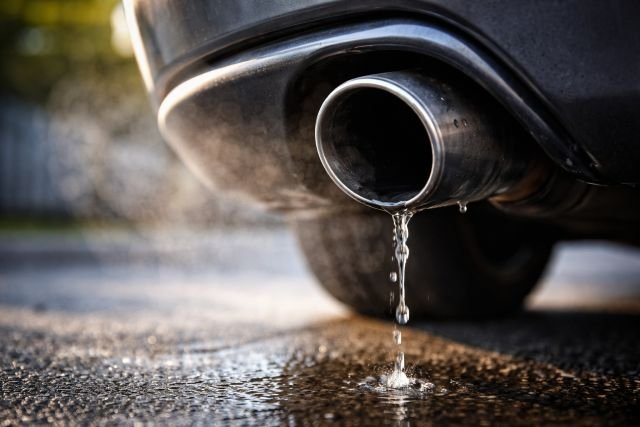
If you’ve noticed car leaking water from the exhaust pipe, you’re not alone — and you’re not necessarily in trouble. In many cases, those drips are simply condensation leaving the tailpipe after a cold start. But sometimes, water-like fluid from the exhaust can be a warning sign of coolant getting into places it shouldn’t, especially if you also see persistent white smoke, overheating, or a sweet smell.
- Why a car can leak water from the exhaust in the first place
- Normal vs. abnormal: the quick “is this a problem?” checklist
- The chemistry behind “water from exhaust” (and why it’s actually expected)
- When “car leaking water” is really coolant (the big red flag)
- Step-by-step diagnosis: how to tell what’s dripping
- Real-world scenarios (what this looks like day to day)
- Can exhaust water cause damage?
- Actionable tips: what to do right now
- FAQ
- Conclusion: when “car leaking water” is fine — and when it’s a warning
This guide breaks down what’s normal, what’s not, and how to quickly diagnose what your car is trying to tell you — without guesswork.
Why a car can leak water from the exhaust in the first place
Let’s start with the “why,” because it makes the rest easy to understand.
When gasoline burns, it doesn’t just produce carbon dioxide. The hydrogen in fuel combines with oxygen and forms water (H₂O) as a natural byproduct of combustion. That water leaves the engine as water vapor inside hot exhaust gases.
Now add one more factor: your exhaust system (muffler, pipes, resonator) is often much cooler than the exhaust gases — especially right after startup. As the hot vapor travels through cold metal tubing, some of it condenses into liquid water and drips out of the lowest point, usually the tailpipe.
That’s the most common explanation for “water coming out of the tailpipe,” and it’s usually harmless.
Normal vs. abnormal: the quick “is this a problem?” checklist
Here’s the simplest way to separate “normal condensation” from “possible engine trouble.”
Normal condensation (usually harmless)
You’ll typically see water dripping when:
- The engine has just started (especially in cold or humid weather)
- The dripping slows or stops after the car warms up
- The liquid is clear, thin, and doesn’t feel oily
- There’s a brief light mist/steam that disappears quickly
This is common because condensation is most noticeable during the first minutes of running, when the exhaust is cold.
When water from the exhaust may signal trouble
You should be more cautious if:
- The dripping continues long after warm-up
- There’s thick, persistent white smoke
- The exhaust has a sweet smell (often associated with burning coolant)
- Coolant level keeps dropping with no obvious external leak
- The engine overheats, misfires, or runs rough
Coolant intrusion (often from a head gasket issue or cracked head/block) can create persistent white exhaust and a sweet odor.
The chemistry behind “water from exhaust” (and why it’s actually expected)
If you like a clear, science-backed explanation: a gasoline engine ideally produces mostly water vapor and carbon dioxide (plus nitrogen), assuming near-complete combustion. That’s not marketing—it’s chemistry.
And your catalytic converter can add to this effect. Catalytic converters reduce harmful pollutants by converting certain exhaust components into less harmful outputs like CO₂, H₂O (water vapor), and N₂.
So a little water at the tailpipe can actually be a sign the system is doing what it’s supposed to do.
When “car leaking water” is really coolant (the big red flag)
People often say “it looks like water,” but coolant can sometimes look watery — especially if it’s diluted or burning off.
What coolant-in-exhaust usually looks and smells like
Coolant burning in the combustion process often shows up as:
- Thick, white smoke that doesn’t go away
- A sweet, syrupy odor from the exhaust (commonly attributed to antifreeze/ethylene glycol)
- Ongoing coolant loss
- Temperature creeping up (overheating)
If you’re seeing these symptoms together, treat it as urgent. Coolant loss can lead to overheating and severe engine damage if ignored.
Step-by-step diagnosis: how to tell what’s dripping
You don’t need a full workshop to do a first-pass diagnosis. Try this practical routine.
Step 1: Observe when it happens
- Only on cold start, then stops: likely condensation
- After fully warmed up, still dripping a lot: investigate further
Step 2: Check the fluid’s feel and smell (carefully)
Use a white paper towel or cardboard under the tailpipe area.
- Clear, odorless, evaporates easily: usually condensation
- Sweet smell, doesn’t evaporate as quickly: could indicate coolant involvement
- Oily feel or soot-stained residue: can suggest fuel/oil-related issues rather than pure water
Step 3: Watch the exhaust plume
A little visible vapor on a cold morning can be normal. What matters is persistence.
| What you see | What it often means |
|---|---|
| Light steam that disappears quickly | Normal condensation |
| Thick white smoke that lingers | Possible coolant burning / head gasket issue |
| Blue-ish smoke with burnt-oil smell | Oil burning (different problem) |
Step 4: Track coolant level for a few days
If coolant level drops repeatedly and you can’t find an external leak, that’s a strong clue something internal may be happening.
Real-world scenarios (what this looks like day to day)
Scenario A: “It drips water for 5 minutes every morning”
You start the car, you see a small puddle behind the exhaust, and there’s a little mist in the air. Ten minutes later it stops. The car runs fine.
This is classic condensation behavior — especially in cool mornings or humid conditions.
Scenario B: “It keeps dripping, and there’s white smoke at traffic lights”
If the car is fully warm and you still get thick white smoke with a sweet smell, or the coolant level keeps falling, that’s when you stop assuming it’s normal and start testing for coolant intrusion.
Scenario C: “Water seems to drip under the car, not just the exhaust”
Sometimes the “car leaking water” concern isn’t the exhaust at all. A very common normal source is A/C condensation draining from the evaporator. That drip is usually under the passenger side area and increases when the AC runs.
Can exhaust water cause damage?
Normal condensation itself isn’t dangerous, but it can contribute to rust over time — especially if the car is mostly used for short trips where the exhaust never fully heats up and dries out. Short drives can leave moisture sitting in the muffler and pipes.
If your driving pattern is mostly short trips, an easy preventive habit is to take the car on a longer drive occasionally so the exhaust gets hot enough to evaporate accumulated moisture.
Actionable tips: what to do right now
If you see car leaking water from the exhaust, do this in order:
- Confirm it’s from the tailpipe (not AC drain).
- Let the engine reach operating temperature and see if it stops.
- Smell-check the exhaust from a safe distance — sweet odors matter.
- Check coolant level today and again in 2–3 days (engine cold).
- If you notice persistent white smoke, overheating, or ongoing coolant loss, book a diagnostic.
FAQ
Is it normal for a car to leak water from the exhaust?
Yes. Car leaking water from the tailpipe is often normal condensation, especially during cold starts. Water is a natural byproduct of combustion and can condense in the exhaust system before dripping out.
How long should water drip from the exhaust?
In normal conditions, it usually happens during the warm-up period and fades as the exhaust heats up. If it continues after the engine is fully warm, it’s worth checking for other symptoms like smoke, smell, or coolant loss.
What does it mean if white smoke and water come out of the exhaust?
A brief white mist on cold start can be normal. But thick, persistent white smoke — especially with a sweet smell — can indicate coolant entering the combustion process (often related to a head gasket or similar failure).
Can a catalytic converter cause water to drip from the exhaust?
Yes. Catalytic converters help convert harmful exhaust compounds into less harmful substances, including water vapor, which can later condense and drip from the tailpipe.
How can I tell if the liquid is water or coolant?
Condensation water is typically clear and odorless and evaporates easily. Coolant-related exhaust moisture may be paired with a sweet smell, persistent white smoke, and dropping coolant levels.
Conclusion: when “car leaking water” is fine — and when it’s a warning
Seeing car leaking water from the exhaust is often completely normal, especially during cold starts. Water is a natural result of fuel combustion, and catalytic converters can contribute to water vapor that later condenses and drips out.
But if the dripping is paired with persistent white smoke, a sweet smell, coolant loss, or overheating, don’t dismiss it as “just condensation.” Those signs can point to coolant entering the engine or exhaust path — a problem that can escalate quickly if ignored.